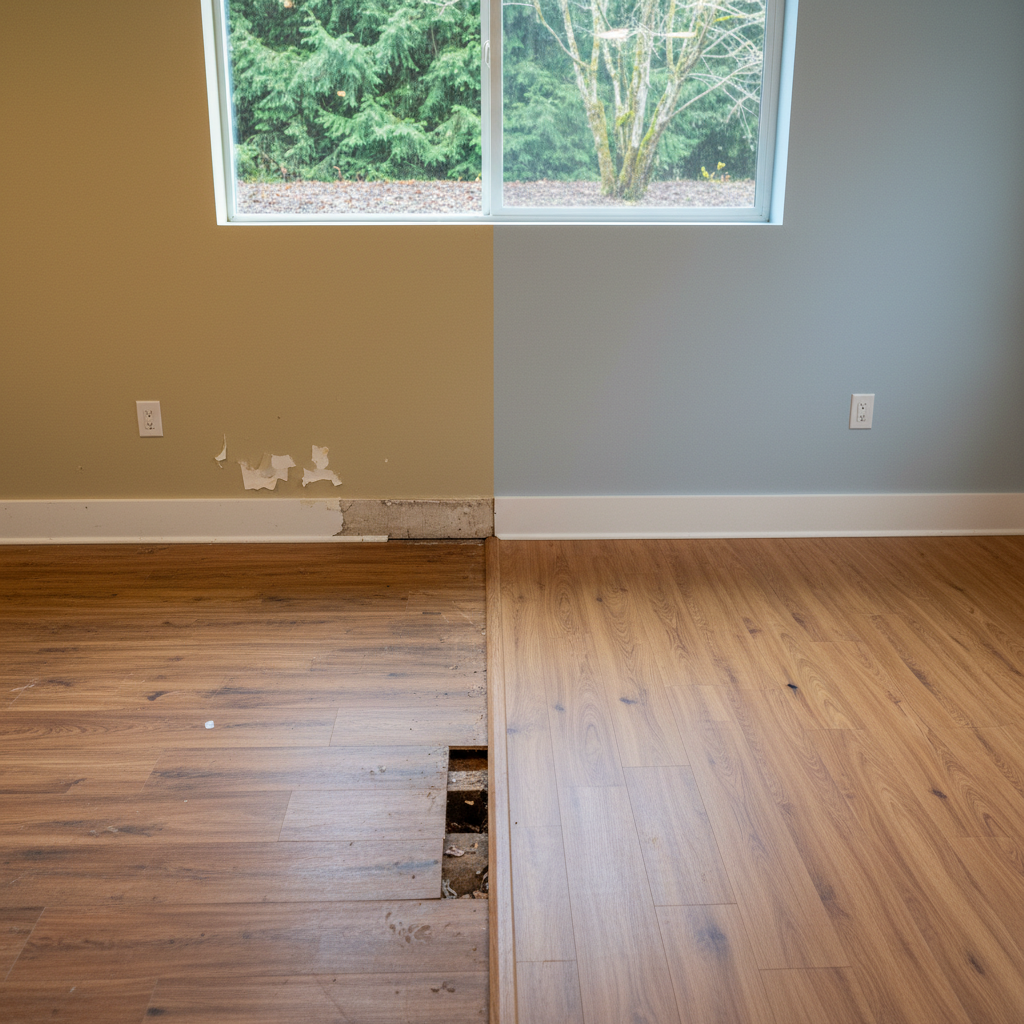
Your home just flooded. It's a gut punch, I know. Once the water's out and everything's dry, you're faced with a big question: do we try to save what's there, or rip it all out and start fresh? This isn't a simple answer, and it depends a lot on what got wet, how long it was wet, and what kind of budget you're working with. As someone who's been doing this for years here in Canby, I’ve seen both approaches, and each has its place.
Repairing What's Wet: The Restoration Approach
When I talk about repairing, I'm usually talking about drying out and salvaging materials that haven't been too badly compromised. This often means things like drywall that got wet only a few inches up, certain types of flooring, or structural wood that's still sound. The goal here is to dry it thoroughly, clean it, and then apply treatments to prevent mold and restore its integrity.
- Cost: Generally, repairing is cheaper upfront. You're paying for specialized drying equipment, labor to monitor and clean, and maybe some minor patching. You're not buying all new materials, which can save a bundle.
- Time: It can sometimes be quicker, especially if the damage isn't extensive. We set up the equipment, let it run, and then do the finishing work. You're not waiting for new materials to be ordered and delivered.
- Durability/Appearance: This is where it gets tricky. If done right, a repaired area can look and perform just like new. But if the material was too far gone, or if the drying wasn't perfect, you might have issues down the road like warping, lingering odors, or even mold growth if moisture wasn't fully extracted. You're essentially betting on the material's ability to bounce back.
- Maintenance: No special maintenance compared to new materials, but you do need to be confident it was dried completely.
Replacing What's Wet: The Reconstruction Approach
This is the full tear-out. If your drywall was soaked past a foot or two, if your hardwood floors buckled, or if insulation got saturated, replacement is often the only smart choice. We remove all the damaged materials down to the studs, dry the structure, and then rebuild with new stuff.
- Cost: This is almost always more expensive. You're paying for demolition, disposal, and then all new materials and installation. Think about the cost of new flooring, new drywall, new baseboards, paint – it adds up fast.
- Time: It usually takes longer. Demolition is quick, but then you've got to wait for drying, inspections, material orders, and then the actual reconstruction phase. This means more time out of your home or living in a construction zone.
- Durability/Appearance: When you replace, you're getting brand new materials. This means you're generally starting fresh with full durability and a perfect appearance. You can also take the opportunity to upgrade materials if you want. No worries about hidden damage or lingering issues from the flood itself.
- Maintenance: It's new, so you're starting with a clean slate.
Which One Should You Choose in Canby?
Here in Canby, especially with our wet winters and the clay soils we often deal with in older neighborhoods, I lean towards replacement for anything that's been significantly saturated. Why? Because that moisture can hang around, and our climate is just too friendly to mold. If you've got water that's been sitting for more than 24-48 hours, or if porous materials like insulation, particle board, or standard drywall have been soaked through, replacement is usually the safer, long-term bet.
For example, if your finished basement in a home near the Molalla River got a few inches of water and it sat for a couple of days, I'd almost always recommend tearing out the lower sections of drywall and replacing any wet insulation. Trying to dry that out perfectly behind existing walls is a huge gamble. You might save a few bucks upfront, but the headache of dealing with mold or rot later isn't worth it.
Now, if it was a clean water spill, like a broken pipe that was caught immediately, and only a small area of a non-porous surface like tile or concrete got wet, then drying and repair might be perfectly fine. But for anything that looks questionable, or if you're dealing with category 2 or 3 water (gray water or black water), replacement is the only responsible choice.
Ultimately, it comes down to peace of mind and long-term value. You don't want to go through all this trouble only to find out six months later you've got a mold problem. My team at Aim High Restoration always assesses each situation carefully, and we'll give you our honest opinion on what we think is the best path forward for your home and your family. Don't hesitate to give us a call if you're dealing with water damage; we're here to help you make the right call.